
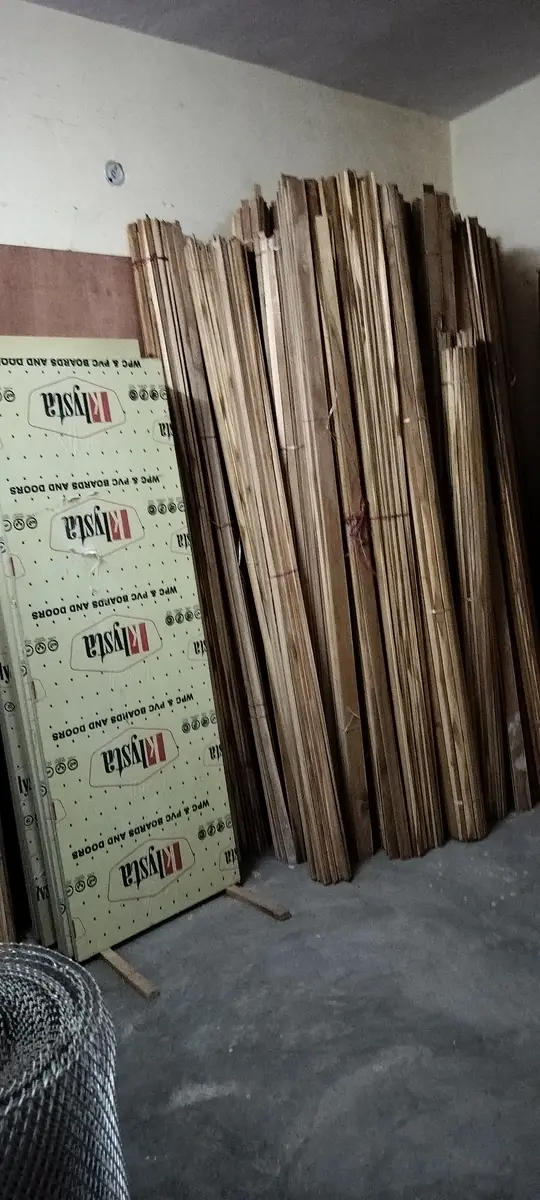
Plywood & Boards
WPC & PVC Boards in Delhi
WPC (Wood Plastic Composite) and PVC boards do not absorb water and are not attacked by termites, so they last in places where wood-based boards fail. They can be cut, screwed and laminated with regular carpentry tools.
| Grade | WPC and PVC |
|---|---|
| Sizes | 8x4 ft standard; ask for other sizes |
| Brands | Mysta |
Where to use WPC & PVC Boards
- Bathroom vanities and cabinets
- Under-sink kitchen cabinets
- Balcony and outdoor storage
- Partitions in damp areas
How to choose
- Use WPC where water contact is constant, such as under the sink.
- WPC is heavier and stiffer than PVC board; PVC is lighter for low-load panels.
- Use screws and adhesive recommended for WPC for a lasting joint.
Why WPC and PVC boards exist
Every wood-based board (plywood, block board, MDF, HDHMR) is made of wood, and wood absorbs water and attracts termites. WPC and PVC boards are made mainly of plastic, so:
- They don't absorb water, so they don't swell, rot or grow fungus
- Termites don't eat them
- They can be cut, screwed and laminated with normal carpentry tools
That makes them the answer for the wettest spots in a home.
WPC vs BWP plywood
| WPC board | BWP plywood | |
|---|---|---|
| Water | Doesn't absorb water | Glue is waterproof; the wood can still absorb water at edges |
| Termites | Not attacked | Depends on treatment |
| Strength and screw holding | Good, lower than plywood | Very good |
| Weight | Heavy | Medium to heavy |
| Best for | Under the sink, bathrooms, balconies | Wet areas that also carry load |
In short: where water stands or drips daily, WPC usually outlasts plywood. Where the furniture carries a lot of weight, plywood is stronger. See WPC board explained.
WPC vs PVC board
- WPC (wood plastic composite) is denser and stiffer. Use it for cabinet bodies and shutters.
- PVC foam board is lighter. Use it for low-load panels, partitions and cladding.
Where to use WPC and PVC boards
- Under-sink kitchen cabinets
- Bathroom vanities and cabinets
- Balcony, terrace and utility storage, washing-machine units
- Partitions in damp areas and ground-floor rooms with damp walls
Working with WPC
- Use screws and adhesive recommended for WPC; standard wood glue doesn't bond well to plastic. Ask for the right adhesive.
- Laminate and edge band can be applied for a finished look.
- Plan supports for long shelves: WPC is heavy and can droop over long spans.
- Outdoors, leave expansion gaps and avoid long runs in direct sun.
For doors, a WPC door is the usual choice for bathrooms.
WPC and PVC boards at Nitin Plywood House, Alipur
We deal in WPC and PVC boards from Mysta, in 8x4 ft sheets. Thickness stock changes often, so call +91-9212017608 to check today's stock and rate.
Brands we deal in
- Mysta
Stock changes often. To check if a brand, grade or size is available today, call Nitin Plywood House, Alipur on +91-9212017608.
Frequently asked questions
Is WPC board better than BWP plywood for bathrooms?
WPC does not absorb water at all and is termite-proof, so in bathrooms and under sinks it usually outlasts plywood. Plywood is still stronger for heavy-load furniture.
Can WPC board be laminated?
Yes, laminates and edge band tape can be applied with a suitable adhesive.
What is the difference between WPC and PVC board?
Both are plastic-based and don't absorb water. WPC (wood plastic composite) mixes wood fibre into the plastic, so it is denser, stiffer and holds screws better. PVC foam board is lighter and suits low-load panels.
Does WPC board expand in the heat?
Plastic-based boards can expand slightly with heat and direct sun. Indoors this is rarely a problem; outdoors, leave the gaps the manufacturer recommends and avoid long runs in full sun.