
13 Oct 2026 • 6 min read • 0 views
Fungus in the Wardrobe and Almirahs on Damp (Seelan) Walls: Causes, Fixes and the Right Board

Short answer: fungus inside a wardrobe comes from damp, usually a seelan (damp) wall behind it or a closed, humid room in the monsoon. Fix the damp first. Then, for new furniture on that wall: BWR plywood (not MR or particle board), laminate or liner on the back panel too, an air gap of about an inch from the wall, a raised base, and edge band on every edge.
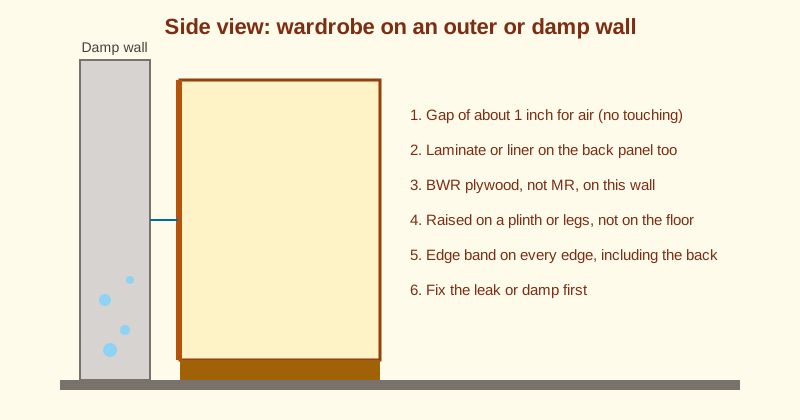
Why it happens
| Cause | Sign |
|---|---|
| Damp wall (outer wall, bathroom on the other side, leaking pipe, ground floor) | Fungus and a musty smell on the back panel and lower shelves |
| No air gap | The back panel touches the wall and stays wet |
| Closed room in the monsoon | Fungus on clothes and shelves, even on an inner wall |
| Board absorbs moisture (MR plywood, particle board, open edges) | Swelling at the bottom and edges |
| Wet clothes put away | Fungus on the clothes first |
What to do now (existing wardrobe)
- Empty it and dry it out: sun the clothes, keep the doors open, run a fan.
- Wipe the fungus off the surfaces and let them dry fully.
- Pull the wardrobe an inch away from the wall if it's free-standing.
- Find the damp: a leaking pipe, a bathroom on the other side, or rain getting into the wall. Get it repaired.
- Keep the room aired in the monsoon; moisture absorbers inside the wardrobe help a little.
- Swollen particle board doesn't recover; replace that panel with BWR plywood.
If there are termites too, treat the wall first: termites in plywood.
Building on a damp or outer wall
| Do | Why |
|---|---|
| BWR plywood for the carcass, BWP for the bottom on a ground floor | Resists moisture |
| Laminate or liner on the back panel's outer face | Seals the side facing the wall |
| Air gap of about 1 inch from the wall | Air moves, the back dries |
| Raised base: plinth or legs, 3–4 inches | Keeps it off a wet floor and mopping water |
| Edge band on every edge, including the back edges | Moisture enters through edges |
| Ventilation slots at the top and bottom of the back | Lets the gap breathe |
| Fix the damp first | No board survives a constantly wet wall |
Can the almirah go on a tiled wall? Yes; tiles stop some damp, but keep the air gap and the sealed back anyway.
If the damp can't be fixed (a constantly wet outer wall), consider WPC board for the lower part or the back, or a different material for that wall: aluminium vs plywood.
Why online furniture suffers most
Low-cost "engineered wood" (particle board) furniture swells and grows fungus fast on damp walls because its edges soak up water: online furniture vs carpenter-made plywood.
FAQ
Why does my wardrobe get fungus every monsoon? A damp wall behind it, no air gap, or a closed, humid room. Fix the damp, keep a gap, and air the room.
Which plywood is best for a wardrobe on a damp wall? BWR plywood, with laminate or liner on the back too, an air gap and a raised base.
Should the wardrobe touch the wall? No. Keep about an inch of gap so air can move behind it.
Nitin Plywood House, Alipur
BWR and BWP plywood, WPC board, liner laminate and edge band for wardrobes on damp walls, delivered anywhere in Delhi. Call or WhatsApp +91-9212017608 for today's rate. See BWR plywood and WPC boards, and the 7×6 almirah material list.