
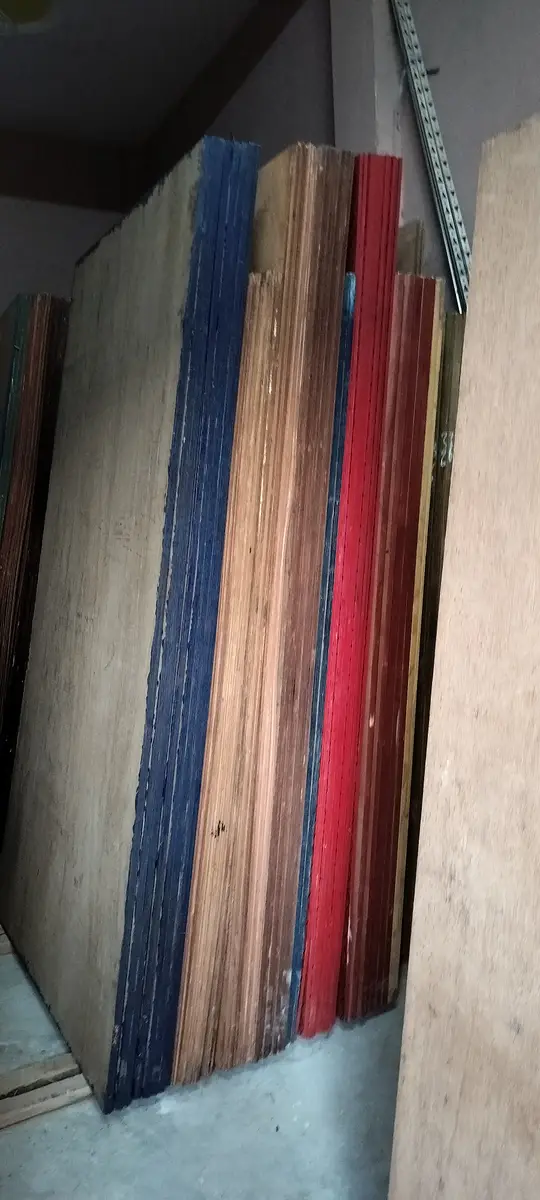
Plywood & Boards
MDF Boards in Delhi
MDF (Medium Density Fiberboard) is made from fine wood fibres pressed into a flat, smooth board with no grain. It paints beautifully and cuts cleanly on CNC machines, which makes it ideal for designer shutters, wall panels and decorative work.
| Grade | Plain and pre-laminated |
|---|---|
| Thickness | 6mm - 25mm |
| Sizes | 8x4 ft standard; ask for other sizes |
Where to use MDF Boards
- Wardrobe and kitchen shutters with PU or paint
- CNC jaali and wall panels
- TV units and display furniture
- Office furniture
How to choose
- Use MDF for shutters and decorative parts, and plywood for the carcass.
- Keep plain MDF away from water; choose HDHMR for moisture-prone areas.
- Pre-laminated MDF saves time when you want a ready finish.
What MDF is
MDF (medium density fibreboard) is made by breaking wood down into fine fibres, mixing them with resin and pressing them into a flat board. Because it has no grain and no layers, MDF has two big strengths:
- A perfectly smooth surface that takes paint, PU and duco finishes evenly
- Clean edges when cut or routed, so CNC jaali, grooves and profiles come out crisp
Its weak points are the opposite of plywood's: plain MDF swells when it gets wet, and screws driven into its edge can loosen over time.
MDF vs plywood vs HDHMR
| MDF | HDHMR | Plywood | |
|---|---|---|---|
| Surface | Very smooth | Very smooth | Wood grain |
| CNC and routing | Excellent | Excellent | Edges can chip |
| Moisture | Poor; keep dry | Moisture resistant | BWR/BWP grades handle it |
| Screw holding | Fair | Good | Very good |
| Best use | Painted shutters, panels, display units | Kitchen and wardrobe shutters, CNC | Carcass, load-bearing parts |
Most modern furniture combines them: a plywood carcass for strength, with MDF or HDHMR shutters and panels for the finish. Read MDF vs plywood for the full comparison.
Plain and pre-laminated MDF
- Plain MDF is for painting, PU, duco, veneer or your own laminate.
- Pre-laminated MDF comes with a ready decorative surface, which saves time and the cost of separate laminate for display units and office furniture.
Where MDF works well
- Painted or PU-finished wardrobe and bedroom shutters
- CNC jaali, pooja unit backs and decorative wall panels
- TV units and display furniture
- Home speaker boxes that stay in one place
Keep plain MDF out of kitchens below the counter, bathrooms and ground-floor rooms with damp walls; choose HDHMR or plywood there.
Thickness guide
| Use | Thickness |
|---|---|
| Shutters | 18mm |
| Wall panels and jaali | 6mm to 12mm |
| Back panels | 6mm |
Tips
- Seal every edge with edge band tape or paint.
- Use screws meant for fibre board and pre-drill; avoid screwing into the edge where you can.
- Store sheets flat and dry before use.
MDF at Nitin Plywood House, Alipur
We stock plain and pre-laminated MDF in 6mm to 25mm, in 8x4 ft sheets. Call +91-9212017608 to check today's stock and rate.
Frequently asked questions
MDF or plywood for furniture?
Plywood is stronger and handles moisture better, so it suits the carcass. MDF gives a smoother finish for shutters, paint and CNC designs. Many carpenters combine both.
Does MDF get damaged by water?
Yes, plain MDF swells when wet. Seal all edges, or use HDHMR board in kitchens and bathrooms.
Is MDF termite proof?
Plain MDF is made of wood fibre, so it is not termite proof unless the manufacturer treats it and says so on the product and warranty. Keep it off damp floors and walls either way.
What is the difference between MDF and HDHMR?
Both are smooth fibre boards. HDHMR is denser and more moisture resistant, so it holds screws better and handles kitchen humidity; plain MDF is lighter and best kept in dry rooms.